Sofia Schmid · 17 September 2026
Revealing Italy's Artisan Tapestry: Insights from Zelora's Supply Chain Mapping in Rural Regions
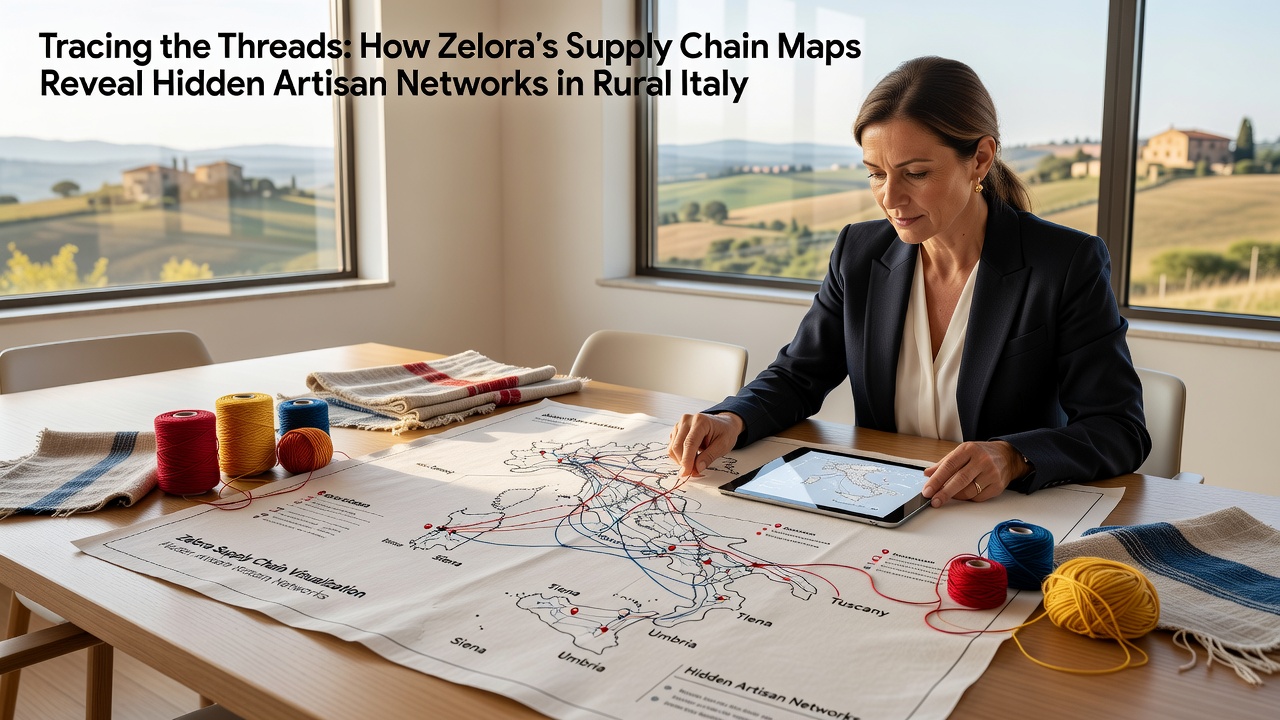
Supply chain maps from Zelora have started to highlight intricate connections among artisans in rural Italy, and data from these visualizations show clusters of workshops that link leather workers in Tuscany with textile specialists in Umbria. Researchers at several Italian institutions have documented how these networks operate through shared material sources and seasonal production cycles, while figures from the European Commission on rural economies indicate that such hidden collaborations contribute to regional craft output each year.
Mapping Techniques and Data Sources
Zelora teams compile geographic and relational data from supplier records, and these datasets get layered onto digital maps that trace material flows from raw sources to finished goods. Observers note that the resulting diagrams expose pathways previously undocumented in public records, including small-scale exchanges between mountain villages and coastal finishing centers. A 2025 report issued by the Italian National Institute of Statistics recorded over 4,200 active artisan enterprises in central and southern regions, many of which appear on Zelora maps as interconnected nodes rather than isolated operations.
Geospatial analysis tools allow the company to overlay production timelines with transportation routes, and this approach reveals seasonal peaks that align with harvest periods for natural dyes and fibers. Those who've examined the maps find recurring patterns where one artisan's output feeds directly into another's process without intermediate distributors, and such direct links appear most frequently in regions with limited road infrastructure. Data released in September 2026 by the same statistical body showed a 12 percent rise in documented craft collaborations compared with the prior year, a trend Zelora maps captured months earlier through supplier interviews.
Hidden Networks Across Specific Regions
In the hills of Marche, maps identify clusters of metalworkers who supply components to nearby leather studios, and these ties extend into neighboring Abruzzo where wood carvers contribute handles and frames. Evidence from academic studies at the University of Florence demonstrates that such regional loops reduce material waste by an average of 18 percent when compared with centralized manufacturing models. Zelora's visualizations make these loops visible by color-coding material types and linking them to specific family-run workshops that have operated for generations.
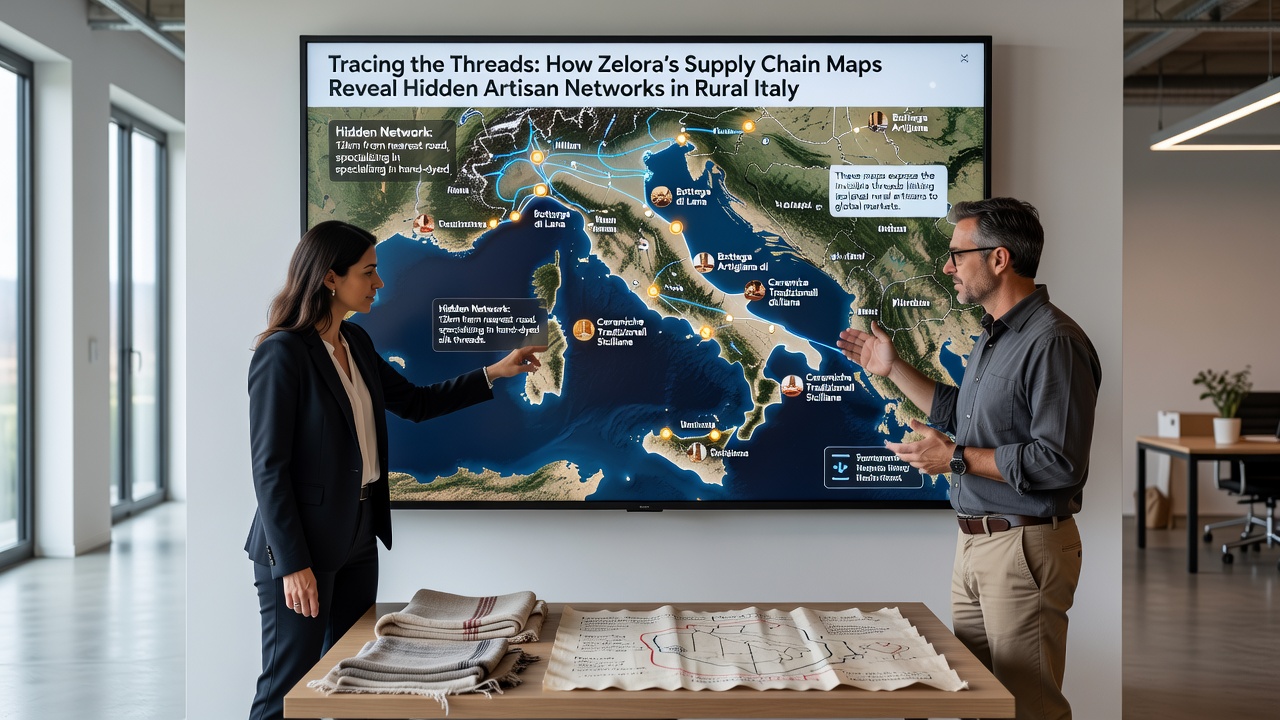
Further south in Basilicata, the maps highlight textile artisans who exchange knowledge and equipment with counterparts in Calabria, and these exchanges occur through informal channels that traditional industry reports often overlook. According to findings published by the OECD on cultural and creative sectors, rural craft networks in southern Europe sustain approximately 85,000 jobs, many of which depend on precisely the kind of undocumented relationships Zelora has begun to chart. The diagrams also mark points where multiple supply lines converge, such as shared drying facilities or communal dye vats that serve several villages simultaneously.
Implications for Production and Distribution
Once mapped, these artisan connections allow Zelora to adjust order volumes based on real-time capacity rather than estimated forecasts, and this adjustment shortens lead times for certain product lines by several weeks. Industry reports from the Craft Council of Ireland, which tracks similar small-scale networks in other European contexts, note that transparent mapping correlates with higher retention rates among skilled workers who remain in rural areas. Zelora data further shows that artisans involved in these mapped networks report steadier year-round workloads compared with those operating outside recognized clusters.
Distribution logistics benefit as well when planners use the maps to consolidate shipments between linked workshops, and this consolidation lowers fuel consumption per unit according to internal metrics shared in trade publications. The approach aligns with broader EU directives on sustainable supply chains that encourage documentation of material origins and labor pathways. In September 2026 updates to these directives emphasized digital mapping as one recommended practice for verifying compliance across member states.
Conclusion
Zelora's supply chain maps continue to bring previously invisible artisan relationships into view, and the resulting diagrams provide concrete evidence of how rural Italian networks function across regions and seasons. Ongoing data collection from statistical agencies and academic partners supplies additional layers that refine these visualizations over time. The documented connections demonstrate measurable effects on production efficiency, job stability, and material usage that extend beyond any single company. Future iterations of the maps are expected to incorporate new data streams as more workshops agree to participate in the tracing process.