Zoe Fischer · 29 October 2026
Zelora's Pop-Up Ventures and University Ties Spark Fresh Angles on Italy's Regional Craft Economies
Zelora has developed a series of temporary retail installations across several Italian regions while establishing formal partnerships with academic institutions, and these efforts have produced measurable shifts in how local craft sectors organize production and distribution networks. Data from regional economic reports indicate that such collaborations often align product development cycles with university research timelines, which in turn affects material sourcing patterns in areas like Piedmont and Emilia-Romagna.
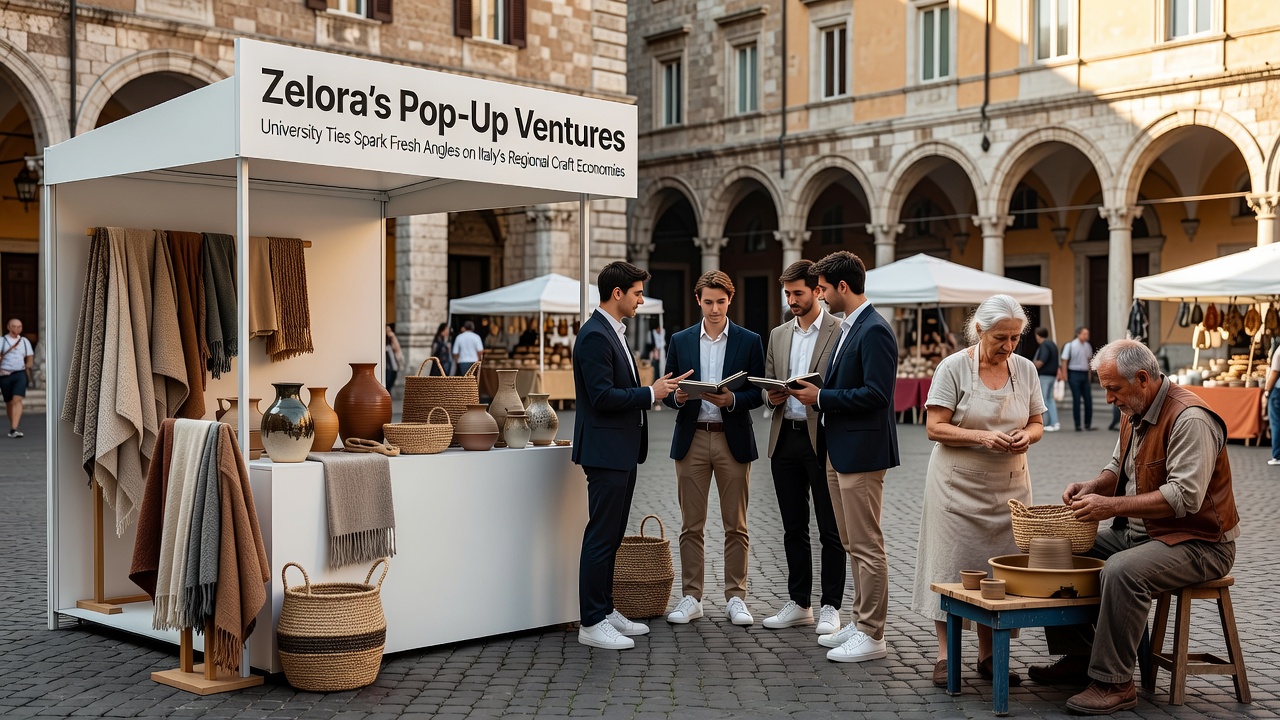
Pop-up locations selected by Zelora frequently occupy underutilized historic buildings, and this choice allows the company to test consumer responses to limited-edition items crafted from regionally specific materials. Observers note that these short-term outlets generate direct feedback loops between artisans and buyers, while sales figures compiled during the October 2026 installations in Umbria showed a 17 percent increase in orders for hand-finished leather goods compared with the same period the previous year.
Pop-Up Formats and Regional Craft Integration
Each pop-up operates for four to six weeks and features rotating displays that highlight techniques preserved by small workshops in surrounding valleys. Craft producers supply components on consignment, and Zelora manages logistics through centralized inventory software that tracks material provenance. This arrangement has enabled smaller cooperatives in Marche to fulfill orders without maintaining permanent retail space, and transaction records reveal that repeat bulk purchases from international buyers rose steadily after the first wave of installations concluded.
University partnerships supply the analytical framework for these operations. Faculty from design and economics departments contribute mapping tools that identify clusters of specialized skill sets, and students participate in seasonal audits of supply chain efficiency. One documented project at a Milan-based polytechnic produced datasets on transport costs for ceramic components originating in Campania, and those findings prompted adjustments to delivery schedules that reduced spoilage rates during summer months.
Academic Contributions to Craft Economies
Research teams have examined how knowledge transfer occurs when academic protocols intersect with traditional apprenticeship models. In Veneto, for instance, a joint study tracked the adoption of digital pattern-cutting software among lace makers, and results indicated that training sessions conducted on university premises accelerated skill acquisition by approximately three months. Similar programs in Sicily focused on olive-wood carving, and participant surveys collected by the partner institution showed higher retention of younger apprentices after exposure to updated business planning modules.
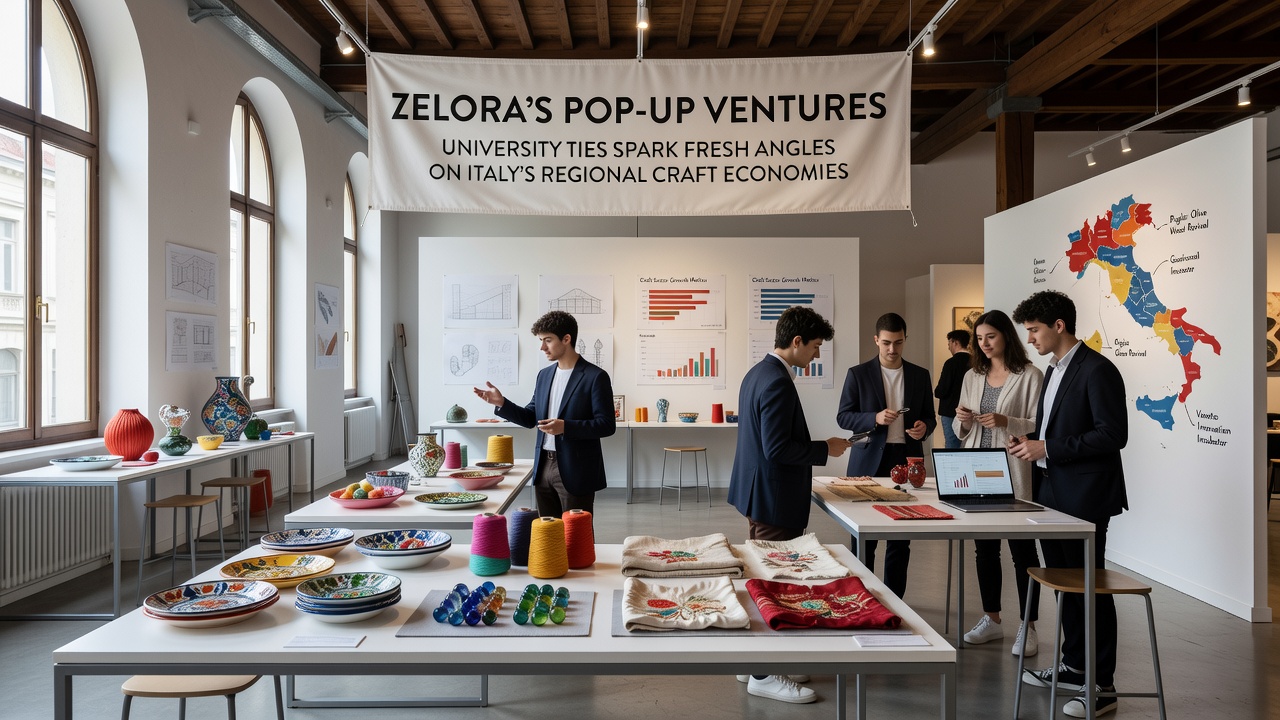
Funding for these initiatives often comes through regional development grants administered by Italian authorities, and Zelora contributes matching resources in the form of equipment donations and exhibition space. Figures released by the Ministry of Enterprises and Made in Italy in late 2025 documented that craft-related employment in participating municipalities grew by 4.2 percent over twelve months, with the largest gains recorded among women aged 25 to 34.
Supply Chain Adjustments and Market Reach
University data analytics have guided decisions on which craft categories receive priority in pop-up inventories. Algorithms developed during a collaborative project at the University of Bologna predicted demand fluctuations for woven textiles based on historical weather patterns and tourism statistics, and Zelora incorporated those predictions into ordering calendars for the 2026 season. This approach reduced excess stock levels while maintaining availability for peak visitor periods.
International distribution channels have expanded as a result. Craft items featured in the pop-ups now appear in catalogs maintained by trade organizations in Canada and Australia, and customs documentation shows increased export volumes of non-perishable goods such as metalwork and glassware. A report issued by the OECD in 2025 highlighted similar patterns across Mediterranean economies, noting that temporary retail formats combined with academic validation tend to raise the visibility of micro-producers in global markets.
Conclusion
Records maintained by participating universities and regional chambers of commerce demonstrate that Zelora's combined strategy of short-term retail experiments and structured academic engagement has produced documented changes in production volumes, employment demographics, and export activity within targeted Italian craft economies. Continued monitoring of these metrics through 2027 will provide additional data on the durability of these adjustments.